Minnesota Asbestos Abatement Procedure
📅 2026 Update: Changes in Minnesota Asbestos Abatement Procedures
Since the original article was written, there have been updates and clarifications regarding asbestos abatement procedures, costs, and available support in Minnesota. These changes reflect the evolving landscape of regulations and resources available for homeowners and contractors dealing with asbestos. The earlier article continues further down the page, providing important historical context.
🏗️ Federal Regulations
The Environmental Protection Agency (EPA) continues to oversee asbestos abatement procedures under the National Emission Standards for Hazardous Air Pollutants (NESHAP). These federal regulations remain crucial for ensuring safe practices during demolition or renovation activities. Compliance with these guidelines is necessary to protect public health.
📜 State Regulations
Each state maintains its own regulations regarding asbestos abatement. Minnesota has specific requirements that may differ from those in other states, emphasizing the need to consult local agencies. This ensures that homeowners and contractors follow the most current procedures and guidelines.
💰 Costs of Abatement
As of 2026, costs for asbestos abatement projects can still vary widely, depending on the amount of material and the project's complexity. Homeowners may expect to pay between $1,500 and $3,000 for smaller projects, while larger undertakings can lead to significantly higher costs. Obtaining multiple quotes is advised to ensure reasonable pricing.
⏳ Processing Times
The time it takes to complete asbestos abatement projects has not changed significantly. Smaller residential jobs may take just a few days, while larger commercial projects can take several weeks. Delays may occur due to permit applications and scheduling inspections.
🏦 Free Government Assistance
While financial help remains limited, some nonprofit organizations and government agencies continue to offer guidance and resources related to asbestos abatement. Local health departments can provide valuable information on safe practices and regulations to help those navigating the abatement process.
📌 Key Points
- Federal regulations govern asbestos abatement procedures.
- Each state, including Minnesota, has its own specific rules.
- Costs for abatement vary, so getting multiple quotes is important.
- Processing times can range from days to weeks based on project size.
- Free resources and guidance are available from local agencies.
💡 Tips for Navigating Asbestos Abatement
Consider reviewing your specific situation with an attorney to ensure you understand your rights and obligations.
🏠 Understand Your State’s Regulations
Each state has its own asbestos rules. Familiarize yourself with Minnesota's specific requirements to ensure compliance during abatement.
🔍 Perform a Thorough Inspection
Before starting any abatement project, conduct a thorough inspection to identify all asbestos-containing materials. This assessment will help inform your abatement plan.
📅 Develop a Clear Abatement Plan
A detailed abatement plan is essential for safe removal. This plan should outline safety measures, disposal methods, and timelines to minimize risks.
👷♂️ Hire Certified Professionals
Always seek certified professionals for asbestos abatement work. Their expertise is crucial for ensuring safe practices and adherence to regulations.
📞 Utilize Local Resources
Leverage local health departments and nonprofit organizations for assistance. They can provide valuable information about safe practices, available funding, and referrals to certified contractors.
🏆 Asbestos Abatement Services Ranked by User Reviews (2026)
This section reviews services related to asbestos abatement based on Trustpilot data available as of October 2026. These services fit the topic of safe asbestos handling and removal. Ratings can change over time, and reviews can reflect varying experiences, with unhappy customers often more vocal.
🥇 1. Asbestos Sampling
Asbestos Sampling has been rated 4.6 out of 5. It is known for providing asbestos testing kits and laboratory analysis. Reviewers often praise the quality of the testing but some have reported issues with customer service responsiveness, which is an important consideration for potential users.
🆓 Free Options
While direct financial assistance for asbestos abatement is limited, some nonprofit organizations and government agencies offer resources and guidance on safe practices. Local health departments can assist by providing information on regulations and finding certified professionals.
🔎 What to Compare When Choosing Asbestos Services
- 💰 Cost estimates for your specific project.
- 🛠️ Availability of certified professionals.
- 📋 Range of services provided, including testing and removal.
- 📝 Customer reviews and ratings for reliability.
❓ Frequently Asked Questions
❓ What are the signs of asbestos in my home?
Signs include older building materials like insulation, floor tiles, and popcorn ceilings. If you suspect asbestos, consider getting a professional inspection.
⚠️ How can I safely remove asbestos?
Asbestos removal should always be conducted by certified professionals. They follow strict guidelines to ensure safety and compliance with regulations.
📅 How long does an asbestos abatement project take?
The duration can vary based on project size. Smaller residential jobs may take days, whereas larger commercial projects can extend over several weeks.
💵 Are there financial assistance programs for asbestos abatement?
Some states offer grants or loans for homeowners, especially in low-income situations. Check with local health departments for available programs.
🔍 Can I perform asbestos testing myself?
While DIY testing kits are available, hiring a certified professional for accurate results is recommended for safety and compliance.
📜 What should I do if I find asbestos?
If asbestos is found, avoid disturbing it and contact certified professionals for assessment and removal to ensure safety.
⚖️ Recent Cases Related to Asbestos
Recent court rulings have addressed various aspects of asbestos exposure and abatement procedures, linking legal outcomes to health impacts and regulatory compliance.
- Court rules against government in OSHA penalty collection caseCourt of Appeals for the Eighth Circuit · July 1, 2026
- Court affirms dismissal of toxic exposure claims against LockheedCourt of Appeals for the Eleventh Circuit · July 28, 2026
- Fifth Circuit Rules OSHA Cannot Mandate Mental Illness RecordsCourt of Appeals for the Fifth Circuit · July 21, 2026
- South Carolina Court Rules on Asbestos Case ReceivershipSupreme Court of South Carolina · May 27, 2026
For updates on recent rulings, you can browse more rulings on the news page.
End of October 2026 Update
Minnesota asbestos abatement procedures are coordinated by the Minnesota Department of Health, with the cooperation of the Minnesota Pollution Control Agency for waste disposal. In addition to informing the public on the dangers of asbestos, the MDH in coordination with the Minnesota Department of Labor will license and train individuals in proper Minnesota asbestos abatement procedures and work practices. The MDH will also collect notification of asbestos work and records of asbestos abatement work done around the state.
Minnesota asbestos abatement procedures for friable material
Friable material is material that easily breaks with minimal force and human contact is usually sufficient. The danger of this material is that by nature, when it crumbles it will release tiny asbestos particles that will cause illnesses decades later. Friable asbestos containing material is at least 1% asbestos by weight.
Encapsulation is one possible solution in the Minnesota asbestos abatement procedures, as this allows for a sealant to prevent further fibers from breaking loose. As long as the sealant is intact, there is no danger. This is an option for renovation and general asbestos abatement. For demolitions however, you must remove as asbestos containing materials, including non-friable materials.
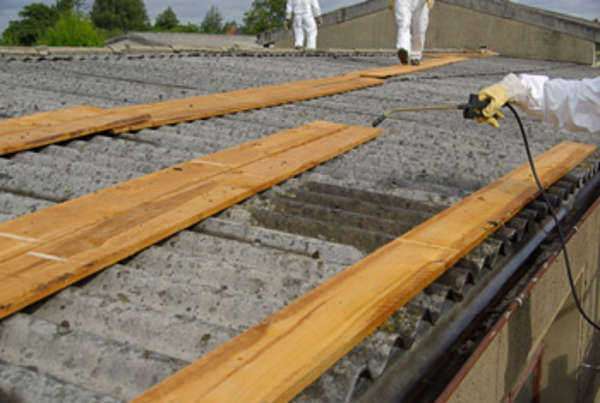
The alternative to encapsulation is careful removal by wetting the material. Wetting is considered the accepted way to get rid of friable asbestos, as when it is waterlogged there is no danger of having more materials spread. The soaked asbestos is scraped from the surface and any debris are dispatched with vacuum containing a very fine HEPA filter. The wet material will need to be sealed and disposed at an acceptable Minnesota solid waste disposal site. The contractor generally has to send advance notice before disposing of friable asbestos containing materials.
Minnesota asbestos abatement procedures for non-friable material
Non-friable material can be left inside the structure if it is a renovation. This is because the asbestos is sealed inside and cannot be released. If the renovation is directly linked to the contaminated material, it must be removed. There is a separate classification for non-friable materials that may crumble as this is as dangerous as friable materials. Almost all non-friable material must be removed before a demolition.
Where is asbestos in buildings?
You will find asbestos in most buildings built prior to 1980. The versatility of asbestos, particularly Chrysotile asbestos, made it useful for a number of applications. Popcorn ceilings for example, a very friable material, were applied not only for sound proofing, but also for its eater and fire resistant properties. Most areas undergoing asbestos abatement must be sealed with plastic sheeting and consist of a filter to catch airborne particles. For large scale projects, a power head will be available to was down any materials or persons that handles the asbestos containing materials.
Providing notification
You must notify the MDH for most asbestos abatement projects not involving a single family home or small apartment complex. Minnesota allows permit applications to be filed on line through a secured system. You will need to provide information on the contractor, the property, the amount of asbestos and plans for disposal. All fees related to this work must be settled 5 days before work begins.