Exposure to Asbestos
📅 2026 Update: Current Landscape of Asbestos Regulations
Since the original article was written, there have been no major changes in U.S. federal asbestos regulations or state-specific abatement procedures as of October 2026. This means that the information in the earlier article remains relevant, providing a solid foundation for understanding asbestos exposure and related health risks.
🏢 Current Fees and Costs
In the District of Columbia, there is a $641 fee for asbestos abatement projects that involve removing between 161 and 1,600 square feet of material. In Delaware, a notification fee is necessary for substantial removal work, but the exact amount is not specified. This highlights that costs can vary by location.
📅 Notification and Permit Deadlines
Both the District of Columbia and Delaware require a 10-working-day notice before starting substantial asbestos removal projects. In D.C., a notification form must be submitted to the Department of Energy and Environment (DOEE). In Delaware, the notice goes to the Department of Natural Resources & Environmental Control (DNREC).
Meeting these deadlines is crucial to avoid delays.
⚠️ Emergency Situations
In emergency situations, such as major fiber release episodes, both D.C. and Delaware can expedite the issuance of asbestos abatement permits. In D.C., this requires submitting a detailed waiver to explain the emergency. This flexibility helps address urgent health risks quickly.
📋 Eligibility Rules for Abatement
For both D.C. and Delaware, permits are required for projects involving the removal of substantial asbestos. In D.C., this is defined as the removal of at least 161 square feet. Delaware also mandates notification for substantial work, but specific eligibility rules are not detailed.
Understanding these criteria is essential for compliance.
📌 Key Points to Remember
- 🏢 D.C. charges $641 for certain abatement projects.
- 📅 Both regions require a 10-working-day notice before starting work.
- ⚠️ Emergency permits can be expedited in D.C. and Delaware.
- 📋 Permits are necessary for substantial asbestos removal efforts.
- 🏠 Proper management is vital to prevent health risks.
💡 Tips for Managing Asbestos Concerns
Review the specific details of your situation with your attorney to ensure you understand your options.
🛠️ Know Your Local Regulations
Understand your local regulations regarding asbestos removal. Each state has different requirements, fees, and processes. Being knowledgeable can help you avoid potential penalties.
📅 Plan Ahead for Notifications
Always plan to submit your notification forms at least 10 working days before starting any asbestos removal project. This allows enough time for processing and reduces the risk of project delays.
🏢 Seek Government Assistance
Utilize available government resources for guidance on asbestos abatement. Agencies like the DOEE in D.C. and the DNREC in Delaware can provide helpful information and support for property owners.
⚠️ Emergency Protocols
Familiarize yourself with emergency protocols for asbestos abatement. In situations where fibers are released, knowing how to expedite permits can be crucial for safety.
🏠 Assess Your Home
If you suspect asbestos in your home, consult a certified professional. They can conduct assessments to determine the presence of asbestos and recommend necessary actions.
🏆 Free Options Ranked by User Reviews (2026)
No national paid service in this area met the review threshold, so this section lists free government and nonprofit resources available for asbestos-related concerns.
🥇 1. District of Columbia Department of Energy and Environment (DOEE)
The DOEE provides guidance on asbestos abatement procedures in D.C. They offer resources for property owners to understand the necessary steps for safe asbestos removal. Their assistance can be vital for navigating local regulations.
🥈 2. Delaware Department of Natural Resources & Environmental Control (DNREC)
The DNREC offers important information regarding asbestos abatement procedures in Delaware. They help property owners understand notification requirements and provide support for substantial removal work. Their resources are essential for compliance.
🥉 3. Environmental Protection Agency (EPA)
The EPA provides national guidelines and resources on asbestos management. Their site includes information on regulations, health risks, and safety measures. It serves as a comprehensive resource for understanding asbestos issues.
4️⃣ State Health Departments
State health departments often have resources on asbestos exposure and health risks. They may provide educational materials and contact information for local assistance. This can help residents stay informed about potential hazards.
🔎 What to Check Before Paying for Help
- 📄 Ensure the service is certified for asbestos work.
- 🕵️♂️ Verify the credentials of any professionals.
- 📞 Check if the service offers free consultations.
- 🔍 Read reviews to gauge service reliability.
- 📋 Confirm the scope of services provided.
❓ Frequently Asked Questions
❓ What should I do if I find asbestos in my home?
If you find asbestos, it is crucial to consult a certified asbestos professional. They can assess the situation and advise on the safest course of action.
💼 How can I ensure my contractor is qualified for asbestos work?
To ensure your contractor is qualified, check for state certification and previous experience with asbestos removal. It's important to hire someone who follows local regulations.
📜 What documentation is required for asbestos abatement?
Proper documentation includes notification forms and waste shipment records. These are essential for compliance with federal and state regulations.
🏠 Are homeowners allowed to remove asbestos themselves?
In some states, homeowners can remove asbestos themselves but must follow specific regulations. It's important to understand local laws before attempting any removal.
📅 How long does it take to process asbestos abatement permits?
In the District of Columbia, permits can be processed within 10 working days. Processing times may vary in other states, so check local requirements.
⚠️ What are the risks of not managing asbestos properly?
Failing to manage asbestos can lead to serious health risks, including mesothelioma and other asbestos-related diseases. Proper management is essential for safety.
⚖️ Recent Cases Related to Asbestos
Recent court rulings have focused on asbestos exposure and the responsibilities of companies to ensure safety. These cases highlight the ongoing importance of managing asbestos risks and protecting public health.
- Court rules teacher entitled to sick leave after COVID-19 exposureNew Jersey Superior Court Appellate Division · April 6, 2023
- Texas Court of Appeals extends abatement in Hughes caseTexas Court of Appeals, 3rd District (Austin) · May 26, 2026
- Illinois Court Upholds Jurisdiction in Asbestos Case Against Japan BrakeAppellate Court of Illinois · September 8, 2026
- Hawaii Supreme Court Rules on Toxic Tort Case CausationHawaii Supreme Court · September 21, 2026
For more recent rulings, feel free to browse more rulings on the news page.
End of October 2026 Update
Mesothelioma is an infrequent and exceedingly dangerous form of cancer that typically originates in the mesothelium—the lining of tissue that serves as a shield for a number of vital organs in the body. Mesothelioma cancer frequently develops from exposure to asbestos filaments or fibers. The bulk of mesothelioma patients will exhibit a detailed history with--whether through employment or private handling-- asbestos fibers and/or filaments.
Mesothelioma cancer exists in several forms; however, the most common cases develop in the internal cavity of the chest and the outer lining of the lungs.
Common mesothelioma symptoms include: shortness of breath (derives from a build-up of fluid between the chest wall and lungs), incessant cough and unexpected or severe weight loss.
One of the reasons why mesothelioma sufferers have such a poor prognosis is because the disease is nearly impossible to detect during its infancy stages. Mesothelioma symptoms may lay dormant for years; the slow-developing symptoms may not become evident until 15-20 years following initial infection. Because of this, the majority of patients will not be aware of their medical infection until the cancer reaches stage III or IV. When mesothelioma cancer advances to this point, the disease is deemed inoperable—only palliative measures are possible.
Similar to other forms of cancers, mesothelioma is categorized by stage. When the disease progresses the outlook—regarding survival rate--becomes utterly dreadful. The insidious nature of mesothelioma cancer works in tandem with its inconspicuousness symptoms to create a fatal disease. An overwhelming percentage of mesothelioma patients will die from the cancer within a year of diagnosis. Because most mesothelioma patients are made unaware of their condition until the cancer has already metastasized, treatment options are largely palliative in nature.
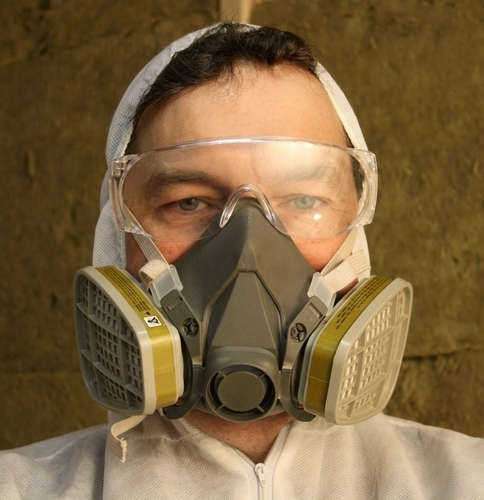
Due to these bleak characteristics it is paramount that you take the proper precautions when handling asbestos and other agents that may promote the formation of mesothelioma tumors.
Mesothelioma and Asbestos:
Mesothelioma cancer, which typically attacks the abdomen and lungs, was exceedingly rare until the commercial and industrial use of asbestos expanded in the 1900’s. After decades of medical research, oncologists and other professionals in the field have concluded that asbestos exposure is the primary culprit for fostering and promoting the development of mesothelioma.
The International Agency for Research on Cancer and Mesothelioma confirmed this sentiment in March of 2009—the institute claims that all forms of asbestos fibers can perpetuate the development of mesothelioma and that asbestos exposure is in fact, the foremost cause of mesothelioma cancer.
Where am I at Risk of Being Exposed to Asbestos?
Until the early 1980s, because of their heat resistant particles, asbestos fibers were practically everywhere, including homes and businesses. Work-related asbestos exposure was the greatest factor regarding the precipitation of mesothelioma and other asbestos-related cancers. With so many materials once created with asbestos, there are a variety of ways an individual could have experienced exposure, including:
•A person may experience asbestos exposure by living in a residential area near an asbestos mine
•People may experience asbestos exposure from working at asbestos mines or asbestos processing plants
•Individuals are often exposed to asbestos from working in high-risk occupational settings such as positions within the automotive or construction industry.
•Asbestos exposure is common when renovating homes that contain asbestos pipes
•Serving on military ships or facilities where asbestos was previously used in construction is another way to be exposed to asbestos.
Generally, it takes repeated, heavy exposure of asbestos in an occupational environment to be deemed at risk for mesothelioma cancer and other asbestos-related diseases. Once the asbestos filaments accumulate in the body, they stick to the lungs and chest cavity. The fibers then trigger a number of biological shifts that may lead to mesothelioma cancer.
How Does Mesothelioma Cancer Develop?
An individual can be exposed to asbestos fibers by ingesting or inhaling the microscopic asbestos filaments. These fibers lodge in the mesothelial lining of vital organs, such as the lungs. Over time, these fibers eat away at the organs resulting in the development of cancerous tumors.
Although the exact way in which asbestos filaments form mesothelioma are widely unknown, there are many postulations to describe the formation:
•Asbestos fibers cause the mesothelial cells to become inflamed and irritated, leading to irreversible cellular damage and cancer.
•The fibers enter the mesothelial cells and ultimately disrupt the natural functions of cellular division. This results in genetic alterations that lead to cancer formations.
•Exposure to asbestos can also trigger cellular production of oncoproteins, which disrupt the mesothelial cells natural function. When infected, the cells ignore cell division restraints and become cancerous.
The common factor which unites these theories is that asbestos leads to irreparable cellular damage, which disrupts the natural cell cycle. Once normal function of the cycle is lost, the cells will begin to divide and expand uncontrollably. These cells will then accumulate mesothelioma tumors, leading to the proliferation of the cancer.
Although asbestos exposure is the common causative agent for mesothelioma cancer, other factors may be involved during the development of the disease. These potential risk factors include the following:
•Radiation Exposure
•The Simian Virus 40 (contaminant of polio vaccinations that was commonly administered during the 50’s and 60’s)
•Other organic materials and genetic history
Although a popular belief, smoking has not been found to perpetuate the formation of mesothelioma cancer in the human body. Research; however, has shown that smoking cigarettes can weaken the body’s lungs and reduce its ability to expel cigarette fibers once they are inhaled. Smoking may also aggravate other asbestos-related symptoms or conditions, including asbestosis.
If you or a family member has been recently diagnosed with mesothelioma cancer, a second opinion is necessary to illuminate your treatment options. Mesothelioma specialists will help clarify the diagnosis and shed light on route is best for you or your loved one.