Tremolite Asbestos
📅 2026 Update: Changes in Asbestos Regulations and Health Risks
Since the original article on tremolite asbestos was written, there have been no significant legislative changes regarding asbestos types from 2024 to October 2026. While the core issues around asbestos exposure and health risks remain relevant, updated information on specific regulations and procedures is essential for understanding the current landscape. The earlier article continues further down the page.
🏠 Current Fees and Costs
Asbestos abatement costs can differ based on local and state regulations. For example, in Delaware, single-family homes do not need to notify state authorities about asbestos abatement. This exemption can influence the approach and expenses for homeowners dealing with asbestos.
🛠️ Asbestos Abatement Procedures
The steps for asbestos abatement remain consistent. They include assessing and identifying asbestos-containing materials, preparing the site to prevent contamination, and removing the materials by certified professionals. Proper disposal of asbestos waste and post-abatement air monitoring are also critical to ensure safety.
🗓️ Deadlines for Abatement
Deadlines for asbestos abatement procedures are determined by state and local laws. In Pennsylvania, for instance, regulations require that friable asbestos be removed before any renovation or demolition. Understanding these deadlines is crucial for compliance and safety.
❗ Eligibility for Assistance
Eligibility for asbestos abatement programs varies by state and local regulations. In Delaware, for example, single-family homes are exempt from certain regulations. Knowing the eligibility rules can help homeowners make informed decisions.
📊 Health Risks of Tremolite Asbestos
Tremolite asbestos can be found in talc and vermiculite. Exposure can lead to serious health issues, including mesothelioma and lung cancer. Proper handling and disposal by certified professionals are essential to reduce the risks associated with this hazardous material.
📌 Key Points
- No significant legislative changes since 2024.
- Fees for asbestos abatement vary by location.
- Abatement procedures include assessment, removal, and monitoring.
- Deadlines for abatement depend on state regulations.
- Tremolite asbestos poses serious health risks.
💡 Tips for Managing Asbestos Risks
Review the details of your situation with an attorney to understand your options regarding asbestos exposure and health risks.
🛡️ Assess Your Home
Conduct a thorough assessment of your home for asbestos-containing materials. Pay close attention to areas with plaster or insulation, especially if your home was built between 1940 and 1980.
🔍 Identify Asbestos Materials
If you suspect materials may contain asbestos, consider hiring certified professionals for testing. Accurate identification is crucial for ensuring safe handling and compliance with regulations.
🏗️ Prepare for Abatement
Before any abatement procedures, prepare your home by sealing off affected areas. This preparation helps minimize the risk of exposure to asbestos fibers.
📅 Know Your State's Regulations
Familiarize yourself with your state’s asbestos abatement regulations. Each state has its own rules, which can affect how you proceed with abatement and disposal.
🛠️ Hire Certified Professionals
Always hire certified professionals for asbestos removal. Proper handling and disposal by trained experts are necessary to prevent health risks and ensure compliance with local laws.
🚨 Monitor Air Quality
After abatement, ensure that air quality is monitored to confirm that asbestos fibers are no longer present. This step is vital for the safety of your home environment.
🏆 Free Options Ranked by User Reviews (2026)
No national paid service in this area met the review threshold, so this section lists free government and nonprofit resources to help with asbestos-related issues.
🥇 1. Local Health Departments
Local health departments can provide guidance on asbestos issues. They often have resources and connections to certified professionals who can assist in testing and abatement.
🥈 2. Environmental Agencies
Environmental agencies offer information on regulations and procedures for asbestos abatement. They may also provide resources for locating certified professionals in your area.
🥉 3. Community Health Programs
Community health programs may offer workshops or information sessions about asbestos hazards. These programs can help residents understand their risks and what steps to take if asbestos is suspected.
4️⃣ State Environmental Protection Departments
State environmental protection departments oversee asbestos regulations. They can assist with compliance questions and provide information on local resources for safe asbestos handling and disposal.
5️⃣ Nonprofit Organizations
Nonprofit organizations focused on public health may have resources for individuals affected by asbestos exposure. They can connect individuals with local services and support groups for further assistance.
🔎 What to Check Before Paying for Help
- 📋 Verify certifications and licenses of professionals.
- 🔍 Check for reviews or ratings from past clients.
- 💵 Compare costs and services offered.
- 📞 Contact multiple resources for advice and options.
- 🚨 Ensure compliance with local regulations.
❓ Frequently Asked Questions
❓ What is tremolite asbestos?
Tremolite asbestos is a fibrous mineral that can be found in products like talc and vermiculite. It's known to pose significant health risks, including mesothelioma and lung cancer.
⚠️ How can I identify asbestos in my home?
To identify asbestos, consider hiring certified professionals who specialize in testing materials. They can provide accurate assessments and safe recommendations.
🔧 What should I do if I find asbestos in my home?
If you find asbestos, do not attempt to remove it yourself. Contact certified professionals for safe handling and abatement procedures.
🕒 How long does asbestos abatement take?
Processing times for asbestos abatement can vary depending on the project's scope and local regulations. Specific timeframes may not be available, so consult local professionals for estimates.
🏢 Are there special rules for commercial properties?
Yes, commercial properties often have specific regulations regarding asbestos abatement. It's essential to consult state and local guidelines to ensure compliance.
📞 Where can I find help with asbestos-related issues?
You can contact local health departments or environmental agencies for guidance on asbestos-related issues. They may provide resources and information on certified professionals.
⚖️ Recent Court Cases Related to Asbestos
There have been recent court rulings concerning asbestos exposure and health risks. These rulings can impact how claims are filed and processed for those affected by asbestos-related diseases.
- Hawaii Supreme Court Rules on Toxic Tort Case AppealsHawaii Supreme Court · September 21, 2026
- Court affirms remand of asbestos case against General ElectricCourt of Appeals for the Sixth Circuit · September 9, 2026
- Texas court continues abatement in landfill dispute caseTexas Court of Appeals, 3rd District (Austin) · August 28, 2026
- Texas Court Rules on Radiation Exposure Malpractice CaseTexas Court of Appeals, 15th District · August 25, 2026
For more recent rulings, feel free to browse more rulings on the news page.
End of October 2026 Update
Tremolite is one of six forms of asbestos and a fibrous, silicate mineral that ranges from white to dark green in color depending on its iron content. Fibrous means that its structure is similar to fibers, namely elongated, stringy and not quite, what you may expect to see in nature. It does also occur naturally in the crystalline form typically associated with minerals.
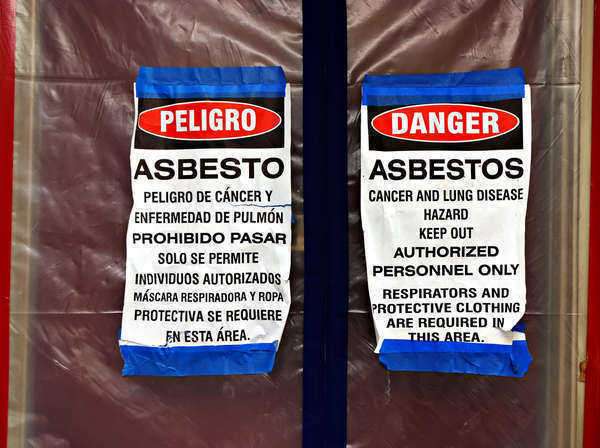
What is the chemical structure of Tremolite asbestos?
The structure of Tremolite can be expressed as:
Ca2 Mg5 Si8 O22 (OH)2
This is a complicated compound, yet one that is able to exist in particles as small as five microns. Particles this small are generally indiscernible to the human eye, making its detection and eventually sickening of victims harder to pinpoint. Asbestos dust is generated through the regular use of asbestos in construction in manufacturing, as well as through mining activity.
What were the uses of Tremolite asbestos?
Tremolite was a versatile mineral that when manufactured into Vermiculite, could be used for insulation, fireproofing, filler, packing material, coatings and water absorption. This should give you an idea of its widespread use, as well as why mining asbestos used to be a lucrative industry. When working with Tremolite, tiny particles would enter the lungs of workers and others, including their families would suffer from indirect exposure. There is no safe level of exposure and Tremolite is uniformly toxic to the human body.
What is vermiculite and how might it affect me?
Vermiculite was one of the most common ways Tremolite asbestos made it into households. While today’s vermiculite has no asbestos content, Vermiculite, particularly under the name Zonolite, had toxic levels of this material. Zonolite was used to insulate walls and attics and was sold under a number of trade names to consumers. Those that have used Zonolite products have almost certainly been exposed to trace amounts of Tremolite asbestos. An estimate one million households have some form of vermiculite in their homes. As long as the insulation is not disturbed, there is only minor danger. Removing the vermiculite or otherwise disturbing it however, will also certainly spread dangerous particles into the air.
How does Tremolite affect the health of those that are exposed to it?
Lung tissue is damaged in a number of ways, most typically through smoking. Inhaling tiny Tremolite minerals does the same damage, except that the damage can never be repaired as the crystal will be embedded in the lung tissue. It make take up to forty years for the symptoms to full manifest, and when they do, the coughing and damage to the lungs appears to suggest emphysema, rather than the presence of a foreign toxic material. Those that have been victims of extended Tremolite exposure will having their lungs lose elasticity and take on the consistency of leather. Losing the elasticity in lungs affects the ability to breathe and fluid will also build up in the lungs. Those suffering from mesothelioma slowly suffocate from this fluid buildup and the difficulty of breathing normally.
How did the mining of Tremolite affect communities in the US?
In recent years, the high instances of asbestos related illnesses in Libby, Montana brought investigation by the government. Decades of mining Tremolite in the area contaminated the area and was present in the air, in homes and the in the soil. During that time, nearly 274 residents had died of asbestos related illness. The W.R. Grace and Company had been mining and manufacturing Zonolite since 1963, and predictably, forty years after, many Libby residents began to show signs of illness. This led to an EPA investigation and the declaration of the area as a Superfund environmental disaster, which entitled federal funding for asbestos abatement and studies on the levels of exposure in the area. This was followed by the EPA’s first ever public health emergency, which allocated another $130 million to the cleanup and medical expenses.
What was the legal ramifications of Tremolite asbestos mining?
In 2008, the EPA launched a $8 million dollar investigation into conditions in the area and upon doing so made the decision to declare the area a disaster zone. To date, $370 million has been spent on the ongoing cleanup of the Libby area. Litigation was not filed by the residents of Libby, as the company quickly settled with many businesses and property owners for $60 million.
Several employees of Grace & Co were put on trial for criminal conspiracy for failing to inform the residents of Libby of the potential harm of Tremolite asbestos knowingly released into the environment. When brought before a jury however, they were acquitted on all counts.
After the healthcare reform overhaul, found in the 2010 Patient Protection and Affordable Care Act, victims of public health emergencies are entitled to Medicare payments, which apply to all Libby residents.
Is Tremolite a banned substance?
Tremolite is no longer used in any building material in the United States. Some countries still mine this mineral and use it for the purposes previously used in the US. This is why it is especially important if for any reason you have worked with insulation and construction abroad. You may not have the legal remedies available through the American legal system, but you will need to be aware of the health hazard and potential, long term consequences.
What should I do if I am exposed to Tremolite?
When you are exposed to Tremolite, you can sue for legal damage if you are able to prove that the employer, builder or other entity was aware of the potential consequences of exposure and did not take adequate preventions to minimize the health impact on the workers. Proving this through litigation will require a mesothelioma attorney that has worked with cases involving Tremolite asbestos exposure. Through this legal action, you will be able to recover compensatory damages and the court may impose additional punitive penalties on violators. Class action suits allow for the compensation of multiple injured parties. Generally you will need to opt out of the class action litigation before being able to pursue your own.