Asbestos Worker Protection
📅 2026 Update: Recent Changes in Asbestos Worker Protection
Since the original article on asbestos worker protection was published, several important changes have occurred in regulations and available resources. Asbestos laws can evolve significantly, and the updates reflect changes in safety standards, testing services, and support options. The earlier article continues further down this page, providing foundational information for context.
🏛️ Asbestos Regulations
As of 2026, regulations surrounding asbestos depend heavily on state laws, which may have shifted between 2024 and 2026. It is essential to stay informed about local guidelines as they can vary widely. The U.S.
Environmental Protection Agency (EPA) and Occupational Safety and Health Administration (OSHA) are crucial resources for understanding these regulations and ensuring compliance.
🧪 Asbestos Testing Services
Many people are concerned about potential asbestos exposure. In recent years, testing services have become more accessible. Asbestos Sampling, with a Trustpilot score of 4.6, is known for its asbestos testing and sample analysis.
However, some reviews point out delays in receiving results, which is an important consideration when time is of the essence.
🏥 Health Risks Awareness
Public awareness of the health risks associated with asbestos exposure continues to grow. Organizations like the Asbestos Disease Awareness Organization (ADAO) provide valuable information on the dangers of asbestos, including its link to diseases like mesothelioma. Understanding these risks is vital for workers and employers alike.
📅 Updated Support Options
As of 2026, various support options are available for individuals affected by asbestos exposure. Nonprofit organizations can offer resources and assistance, helping those who may be navigating complex health and legal issues. It's beneficial to explore these options for support and information.
📌 Key Takeaways
- Regulations differ by state and can change over time.
- Asbestos testing services like Asbestos Sampling are available but may have delays.
- Awareness of health risks related to asbestos is crucial for safety.
- Nonprofit organizations provide valuable support and resources.
- Staying informed through trusted sources like the EPA and OSHA is important.
💡 Tips for Navigating Asbestos Issues
Review your specific situation with an attorney to understand the best course of action for your needs.
🏢 Know Your Rights
Workers should familiarize themselves with their rights regarding asbestos exposure. The Occupational Safety and Health Administration (OSHA) outlines safety regulations that employers must follow. Understanding these rights can help workers advocate for safer working conditions.
🔍 Stay Informed
Keep up with updates from the U.S. Environmental Protection Agency (EPA) and state health departments. This information is essential for understanding the latest regulations and health risks associated with asbestos exposure.
🧪 Consider Testing
If you suspect asbestos in your environment, consider using professional testing services. Asbestos Sampling is a notable option, but be mindful of potential delays in results, as mentioned in reviews.
🏥 Look for Support
Explore resources provided by nonprofit organizations like ADAO. They can offer assistance and information on dealing with asbestos-related health issues and claims.
📜 Document Everything
Maintain thorough records of any exposure incidents or health issues. Documenting these details can be crucial for potential claims and legal actions.
❓ Frequently Asked Questions
🤔 What should I do if I find asbestos in my home?
If you suspect asbestos, do not disturb it. Instead, contact a professional testing service to assess the situation safely.
🛡️ How can I protect myself from asbestos exposure?
Familiarize yourself with safety regulations from OSHA and ensure that your workplace follows proper asbestos management protocols.
🚨 What are the symptoms of asbestos-related diseases?
Symptoms can include coughing, shortness of breath, and chest pain. If you experience these symptoms after exposure, seek medical advice immediately.
📄 How do I file a claim for asbestos-related health issues?
Filing a claim typically involves documenting your exposure and health condition. Consulting with professionals familiar with asbestos claims can help streamline the process.
🏥 Are there support groups for asbestos-related illness?
Yes, organizations like the ADAO provide support groups for those affected by asbestos-related illnesses. These groups can offer emotional support and practical information.
🔍 How often should I have my home tested for asbestos?
Regular testing is recommended if you live in an older home or if renovations are planned. Consult with professionals to determine the appropriate frequency.
⚖️ Recent Court Cases Related to Asbestos
Recent court rulings have highlighted ongoing issues around asbestos exposure and liability. These cases often relate to workplace safety and the rights of workers exposed to asbestos.
- Court rules teacher entitled to sick leave after COVID-19 exposureNew Jersey Superior Court Appellate Division · April 6, 2023
- Texas Court of Appeals extends abatement in Hughes caseTexas Court of Appeals, 3rd District (Austin) · May 26, 2026
- Illinois Court Upholds Jurisdiction in Asbestos Case Against Japan BrakeAppellate Court of Illinois · September 8, 2026
- Hawaii Supreme Court Rules on Toxic Tort Case CausationHawaii Supreme Court · September 21, 2026
For more detailed information about recent rulings, please check the section for more rulings on the news page.
End of October 2026 Update
What is the Asbestos Worker Protection Clause?
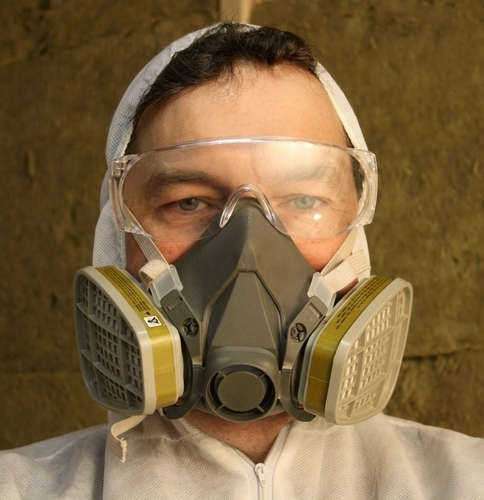
The Asbestos Worker Protection Clause is a subsection of the Federal Register Environmental Plan (Toxic Substances Control Act) that was passed in November of 2000. This particular subpart protects certain state and local government employees who are not protected under the Asbestos Standards of the Occupational Safety and Health Administration. The Asbestos Worker Protection Clause applies only to OSHA Asbestos Standards and to employees connected to 29 CFR 1926.1101
So, the Asbestos Worker Protection clause will apply to you if you are a state or local government employer and you are not subject to the State asbestos standard implemented by the Asbestos Standards of the Occupational Safety and Health Administration. This plan, particularly section 18, exempts certain government employers or employees from the requirements of the Asbestos Worker Protection Clause. If you are not listed as exempt, you are required to protect your employees from occupational exposure to asbestos fibers.
What does the Asbestos Worker Protection Clause Require me to do?
If you are a local or state government employer whose employees perform the following actions you must comply with the Asbestos Workers Protection Clause:
•If your construction activities identified in 29 CFR 1926.1101 you are required to:
oComply with the Occupational Safety and Health Administration’s protocol and standards implemented in 29 CFR 1926.1101.
oYou must also submit notifications required for alternative control methods to the board of directors for the National Program Chemical Division. Also, you will be required to send notifications to the Environmental Protection Agency and the Office of Pollution Prevention and Toxics.
oYou must comply with the Occupational Safety and Health Administration’s standards listed in 29 CFR 1910,1001 for all repair, cleaning or replacement of asbestos-containing materials, including clutch plates, brake shoes, brake pads and brake linings. Moreover, you must comply with the removal of asbestos-containing materials and residue found from brake drums or clutch housings.
Can a State implement its own Asbestos Worker Protection Plans?
This section—labeled 763.123 of the Asbestos Worker Protection Plan—describes the process under which an individual state may be exempted from the requirements of this sub-section:
•For states seeking an exemption to the Asbestos Worker Protection clause: If your particular state wants to implement a unique asbestos worker protection plan—as oppose to complying with the federal regulations—your state government must apply for and subsequently receive an exemption from the Environmental Protection Agency.
•What must my state do to apply for this exemption? To apply for the above-listed exemption from the requirements of the asbestos worker protection clause, your individual state government must send to the Director of the Environmental Protection Agency’s Office of Pollution Prevention and Toxics a copy of its asbestos worker protection regulations and a thorough explanation of how your state government’s asbestos worker protection plan fulfills the requirements of the Toxic Substances Control Act.
•What action will the Environmental Protection Agency take on my State’s application for a formal exemption? The Environmental Protection Agency will review your state’s application to subsequently render preliminary determinations on whether your state’s asbestos worker protection falls in line with the requirements latent in section 18 of the Toxic Substances Control Act. If the Environmental Protection Agency’s determination states that your state’s plan does meet the requirements latent in section 18 of the Toxic Substances Control Act, the Environmental Protection Agency will initiate a rulemaking, including opportunities for public comment to exempt your state from the restrictions or requirements of the federal asbestos workers protection plan. After reviewing and considering these comments, the Environmental Protection Agency will issue a final judgment granting or denying the exemption.
•If the Environmental Protection Agency’s preliminary determination states that your individual plan does not meet the requirements latent in section 18 of the Toxic Substances Control Act, the EPA will notify your state government—in writing—and will provide your state with a reasonable opportunity to respond to the ruling.
•If the Environmental Protection Agency rejects your state’s proposal for a formal exemption, then the local and/or state government’s employers are subject to the requirements of the federal asbestos worker protection plan.
•States that are granted an exemption from the government: if the Environmental Protection Agency exempts your state from the requirements from the asbestos worker protection plan, your individual state is required to update its asbestos worker protection regulations to implement alterations that meet the requirements of this subsection—these changes must apply to the Environmental Protection Agency’s for an amendment to the proposed exemption
What must a State do to Apply for an Amendment to its Exemption?
To apply for an amendment to a federal exemption, a state must send to the Director of the OPPT a copy of its newly-created asbestos worker protection regulations. Moreover, the state must provide a detailed explanation of how your state government’s asbestos worker protection plan complies with the requirements of section 18 of the Toxic Substance Control Act. Your state government is also required to submit an application for an amendment within 6 months of the effective date of any alterations to the requirements of the asbestos worker protection plan. This time limit may vary based on your state’s particular proposal; sometimes the Environmental Protection Plan will require your state to submit an amendment within a reasonable time that is agreed upon between your state government and the OPPT.
What Action Will the Environmental Protection Agency Take on my State’s Amendment Application?
The Environmental Protection Agency, upon receiving your state’s application for amendment, will review the request for an amendment and offer preliminary determinations based on whether your state’s updated asbestos worker protection plan fulfills the requirements of the Toxic Substance Control Act.
If the Environmental Protection Agency determines that the updated state plan fulfills the requirements of section 18 of the Toxic Substance Control Act, they will issue your state government an amended exemption.
If the Environmental Protection Agency renders the updated state plan ineligible for meeting the requirements of section 18 of the Toxic Substance Control Act, the Federal EPA will notify your state—in formal writing—and will offer your local government a reasonable opportunity to respond to the ruling.
If the Environmental Protection Agency does not grant your individual state an amended exemption, or if your local government does not submit the application in a timely manner, then the state and local government’s employers will remain subject to the requirements of the Asbestos Worker Protection Plan.
Subpart G - Asbestos Worker Protection
The purpose of Subpart G of the Code of Federal Regulations is to protect workers for state and local governments that may not be covered by mandates from the federal Occupation Health and Safety Administration. This ensures that workers have adequate protection when working with asbestos containing materials and that the provisions of the OHSA, such as providing adequate equipment and maximum thresholds for exposure are followed.
Who is covered under Subpart G?
All employers that have workers that perform construction, custodial or repair for state and local governments must be covered under OHSA mandates. These mandates are wide and exhaustive, covering proper abatement procedure, safety precautions and other relevant information necessary to prevent further contamination.
States may implement their own OHSA worker safety program but will need to apply for a waiver from the EPA. To have the waiver approved, the state agency must demonstrate that their worker protection program meets federal standards, as well as a full copy of that plan for further evaluation. It is the responsibility of the state program, if it is granted a waiver, the program must comply with any changes to asbestos law and make changes in its own asbestos worker program to reflect these changes. Some plans will be given time to be amended before it will be approved as a standalone worker safety program.
What do federal standards say about worker safety?
The OHSA standards referenced in Subpart G are exhaustive and generally cover the three previously mentioned professions, which are construction, auto repair and custodial. This applies to all instances of these professionals when in the employment of schools, government agencies or private sector work.
Construction worker regulations focus on training and certifying workers, contractors, inspectors and others to identify asbestos materials in buildings. This ensures that proper procedures are taken to prevent secondary contamination through improper removal. All but a few states follow OHSA guidelines to certify workers and other asbestos professionals in asbestos abatement procedure. All other states will have equivalency agreements with other states in compliance with the regulations, or rely on the EPA to certify asbestos professionals.
There is an intersection between public safety and worker safety in regards to asbestos abatement. Not only do regulations ensure that workers are given adequate protective materials, but they will work inside an enclosure while they perform abatement. Certain equipment is specified and those tools, such as extra fine HEPA filters must be used to catch all possible asbestos fibers that inevitably come loose during abatement. This is why Subpart G is necessary to protecting workers from gaps in enforcement of critical asbestos laws.
Maintenance workers are also covered by OHSA mandates. This includes training these workers to identify crumbling sources of asbestos, reporting findings in a timely manner and inspecting workspaces for hazardous conditions that result from open asbestos deposits. Similarly, auto mechanics will have specific regulations on the removal of asbestos containing auto parts, including asbestos brake pads. As asbestos has not been totally banned in the US, continued enforcement, through Subpart G is critical to preventing gaps from causing workers to operate in poor conditions.