Arizona Asbestos Abatement Procedures
📅 2026 Update: Changes in Arizona Asbestos Abatement Procedures
Since the original article on Arizona asbestos abatement procedures was published, there have been some notable updates in the field. These changes impact how asbestos is managed and the resources available for those affected. The earlier article continues further down the page, providing foundational information on this important topic.
🏗️ Federal and State Regulations
In 2026, the Environmental Protection Agency (EPA) still oversees asbestos abatement under the National Emission Standards for Hazardous Air Pollutants (NESHAP). Each state, including Arizona, maintains its own specific regulations on asbestos removal. It's crucial to check with state environmental agencies for the latest rules, as these can change frequently.
📝 Abatement Procedures
The general steps for asbestos abatement remain the same. Professionals start with an inspection to find asbestos materials. They then conduct a risk assessment to determine exposure risks.
Following this, they create a detailed plan that outlines safety measures. Finally, certified professionals carry out the removal and ensure proper disposal of the asbestos waste according to federal and state laws.
💰 Cost of Abatement
Costs for asbestos abatement have not changed significantly since the article was written. Homeowners can still expect to pay between $1,500 and $3,000 for smaller projects. Larger projects may be more costly.
It remains advisable to get multiple quotes from certified contractors to understand the price range better.
⏳ Processing Times
The time it takes to complete an asbestos abatement project varies. Smaller residential jobs may wrap up in a few days, while larger commercial projects can last several weeks. Delays can occur due to permitting and inspections, so it's important to plan ahead.
📌 Key Points Summary
- Federal and state regulations remain important for asbestos abatement.
- The abatement process involves inspection, risk assessment, planning, removal, and disposal.
- Costs for small-scale projects typically range from $1,500 to $3,000.
- Processing times can vary widely based on project size.
- Always consult local agencies for the most current information on regulations and procedures.
💡 Practical Tips for Asbestos Abatement
It's important to review your specific situation with an attorney.
🏠 Know Your State Regulations
Each state has different regulations for asbestos removal. Check with your local environmental or health department to understand the specific rules in Arizona.
🔍 Conduct Inspections
Before starting any demolition or renovation, have a certified professional inspect the property for asbestos. Identifying asbestos-containing materials is crucial for safe handling.
📋 Create an Abatement Plan
If asbestos is found, work with professionals to develop a clear abatement plan. This plan should outline the steps for safe removal and include necessary safety measures.
🚧 Hire Certified Contractors
Always hire licensed and certified asbestos abatement contractors. They have the training and expertise to handle asbestos safely and comply with regulations.
📆 Stay Updated
As laws and guidelines can change, regularly check for updates from the EPA and your state’s environmental agency. Staying informed can help ensure that all procedures are followed correctly.
🏆 Services Ranked by User Reviews (2026)
This section covers services related to asbestos testing and abatement. These services are ranked based on Trustpilot data as of October 2026. Keep in mind that user ratings may change, and it's important to consider both positive and negative feedback from reviewers.
🥇 1. Asbestos Sampling
Asbestos Sampling has been rated 4.6 out of 5 stars. This service is known for its asbestos testing kits and laboratory analysis. Reviewers appreciate the accuracy of their testing, but some have reported issues with customer service responsiveness.
🆓 Free Government and Nonprofit Help
While direct financial assistance is limited, some government and nonprofit organizations offer helpful resources. The EPA provides educational materials, and local health departments can direct you to certified professionals.
🔎 Choosing an Asbestos Service
When selecting a service, consider these points:
- 🧪 Testing accuracy and reliability
- 📞 Customer service quality
- 💰 Pricing structure and transparency
- 🛡️ Certification and licensing of contractors
- 📅 Availability and responsiveness
❓ Frequently Asked Questions
🤔 What is asbestos abatement?
Asbestos abatement refers to the process of removing or containing asbestos-containing materials to prevent exposure and health risks. This process must follow federal and state regulations.
🚨 How can I find certified asbestos contractors?
You can find certified asbestos abatement contractors by checking with your state's environmental or health department. They often maintain lists of licensed professionals.
📜 Are there financial assistance programs for asbestos removal?
Yes, some states offer grants or low-interest loans for asbestos removal, particularly for low-income homeowners. Check with local health departments for details.
⏲️ How long does asbestos abatement take?
The length of an asbestos abatement project varies based on the size and scope. Smaller residential jobs may take a few days, while larger projects can take weeks.
🔍 How can I ensure safety during abatement?
It's crucial to hire certified professionals for the abatement process. They are trained to implement safety measures and ensure compliance with regulations.
📚 Where can I find more information on asbestos regulations?
For more information on asbestos regulations, visit the EPA’s website or contact your local environmental agency. They provide up-to-date resources and guidelines.
⚖️ Recent Cases Related to Asbestos
Recent court rulings have focused on asbestos exposure cases and liability for damages. These rulings connect directly to the importance of following proper asbestos abatement procedures and regulations.
- Court rules against government in OSHA penalty collection caseCourt of Appeals for the Eighth Circuit · July 1, 2026
- Court affirms dismissal of toxic exposure claims against LockheedCourt of Appeals for the Eleventh Circuit · July 28, 2026
- Fifth Circuit Rules OSHA Cannot Mandate Mental Illness RecordsCourt of Appeals for the Fifth Circuit · July 21, 2026
- South Carolina Court Rules on Asbestos Case ReceivershipSupreme Court of South Carolina · May 27, 2026
You can find more information on recent rulings by checking the news section.
End of October 2026 Update
Asbestos regulations in Arizona follow national standards for reporting and accounting on asbestos abatement and contamination.
For counties under the Arizona Department of Environmental Quality
For private buildings and facilities in counties that fall under Arizona Department of Environmental Quality, they will follow the same standard set by the Asbestos National Emission Standard for Hazardous Air Pollutants (NESHAP). This includes contacting the department with written notification ten working days before renovation or demolition, observing the minimal thresholds for reporting asbestos abatement and observing the appropriate rules on disposal of the hazardous material. Any certified Arizona asbestos abatement entity can facilitate this for you.
For Pima, Maricopa and Pinal counties
Arizona’s three largest counties have their own entities for asbestos abatement that have stricter standards than those set by NESHAP. These counties also charge fees when you provide notice of asbestos abatement. These fees cover the costs of inspection and certification of the property. The fees charged by these counties are separate for renovation and demolition, so if the property must be abated and then demolished, you will be charged two fees. Depending on current laws, you may not have to notify state or county authorities if you live in a residential building with less than four units. Check with your county government to be sure of the current policy.
What are RACM materials?
Arizona asbestos abatement procedures identify restricted asbestos carrying materials as materials that are at least 1% by weight made of asbestos. Recall that even trace amounts of asbestos carry thousands on potentially sickening micro fibers.
Friable ACM can be broken with human pressure as this was typically weakly applied to structures for quick fireproofing and insulation. This is the most susceptible break apart during regular use and will be subject to the most stringent cleanup regulations.
Non-friable asbestos should generally be undisturbed as it is safely sealed inside something that will not be easily broken and therefore does not expose the asbestos to air. If the structure will be demolished however, except to comply with Arizona asbestos abatement procedures and inspection to ensure that the renovation or demolition will not expose the dangerous materials. Federal regulations typically mandate that non-friable material that may be compromise be removed from a structure before demolition.
How is asbestos cleaned according to Arizona asbestos abatement procedures?
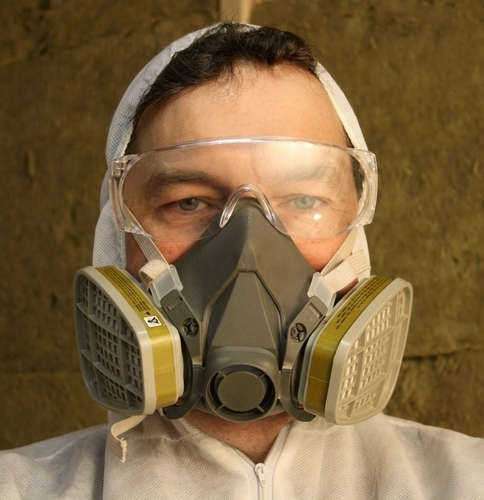
The focus of asbestos abatement procedures is to prevent both long term and incidental asbestos exposure. Asbestos is most easily spread though disturbing asbestos fixtures needlessly, such as through amateur removal. Although those that work with asbestos regularly are the most vulnerable to illness, you will not want to inhale this material as it is toxic and will not break down in your lungs. Smokers and those with lung problems will be especially sensitive to loose asbestos particles. Federal mandates require a HEPA filter and vacuums to catch the smallest of airborne particles.
There is the alternative to seal friable asbestos through a process called “encapsulation.” This does not remove the asbestos but as long as the seal remains, there is no risk and the asbestos is non-friable. This is typically done on popcorn ceilings.